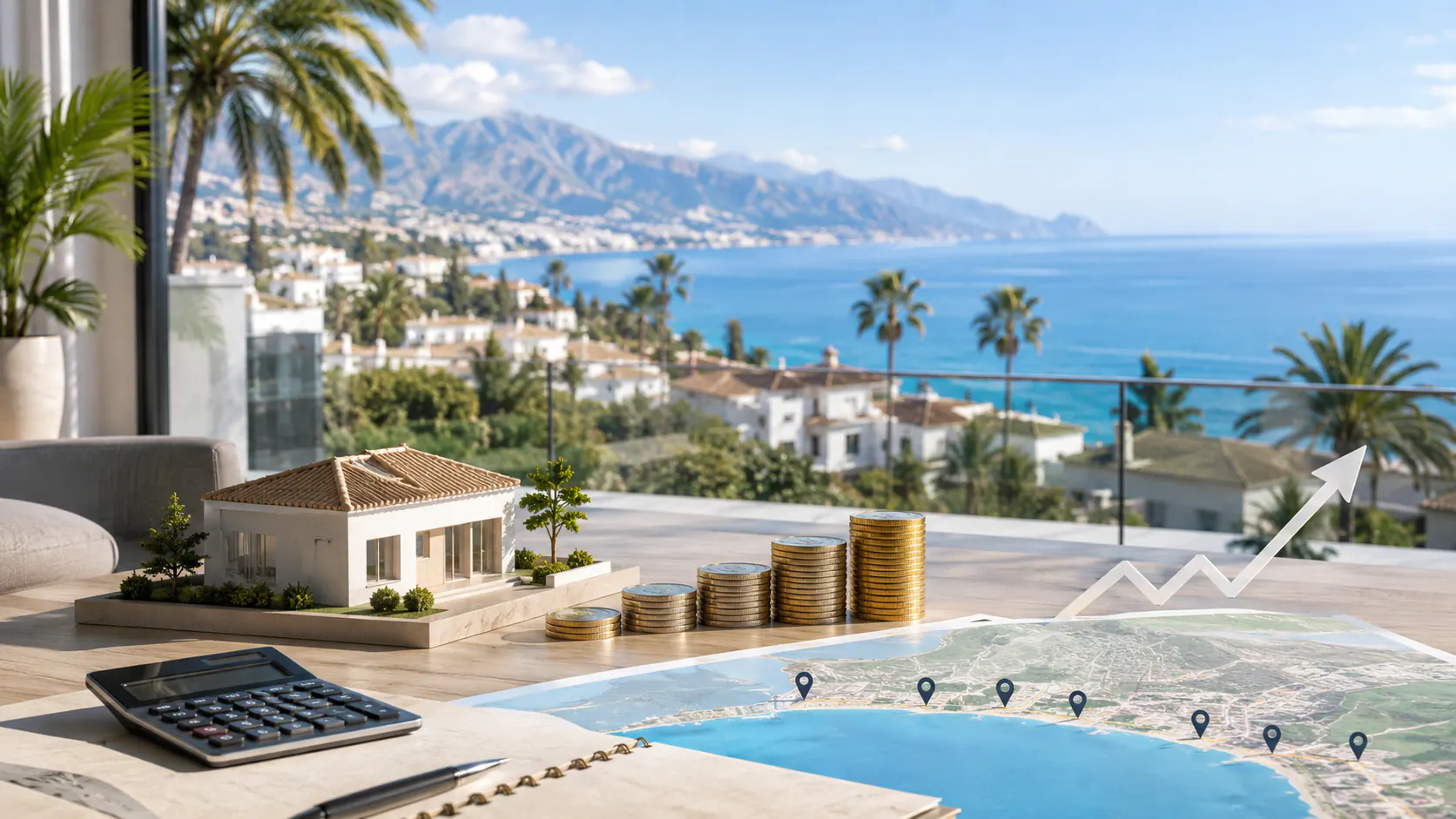
The Ultimate Guide to Buying Property on the Costa del Sol

Everything you need to know about buying a home on the Costa del Sol: from the initial search to the final signing at the notary—step-by-step and with no surprises.
Buying a property on the Costa del Sol is a dream for thousands of people every year, both Spaniards and foreigners alike. However, the process can be complex if you aren’t familiar with the steps, real costs, and legal particularities. This guide accompanies you from the very first moment until you have the keys in your hand.
Why the Costa del Sol Remains a Safe Bet
Before diving into the buying process, it’s worth understanding what makes this region so special:
- Exceptional Climate: Over 320 days of sunshine a year and mild winter temperatures.
- Connectivity: Malaga Airport offers direct flights to over 120 European destinations.
- World-Class Infrastructure: High-quality healthcare, international schools, and prestigious golf courses.
- Consolidated Market: Sustained demand for both permanent residence and holiday rentals.
- Quality of Life: Gastronomy, culture, nature, and leisure all in one environment.
If you’re interested in which areas offer the best potential based on your goals, we recommend checking our analysis of the best areas to invest in Malaga in 2026.
The Step-by-Step Buying Process
Step 1: Define Your Real Budget
Don’t just focus on the property price. You need to calculate the total budget including:
| Item | Percentage / Amount |
|---|---|
| Property Price | 100% |
| Taxes (ITP or VAT + Stamp Duty) | 8-11% |
| Notary Fees | 0.5-1% |
| Land Registry | 0.2-0.5% |
| Gestoría (Admin Fees) | €300-600 |
| Valuation (if mortgaged) | €300-500 |
| Lawyer (Recommended) | Approx. 1% |
Rule of Thumb: Add 12-14% to the property price for expenses. If you buy for €300,000, you will need between €336,000 and €342,000 in total.
If you need financing, banks typically lend between 70-80% of the valuation (60-70% for non-residents). This means you should have at least 20-30% of the price saved plus expenses. To understand how to get the best terms, consult our guide on how to obtain the perfect mortgage.
Step 2: Obtain the NIE (If You Are a Foreigner)
The NIE (Número de Identificación de Extranjero) is essential for any real estate transaction in Spain. Without it, you cannot buy, open a bank account, or sign before a notary.
How to get it:
- From Spain: At the Foreigner’s Office (Oficina de Extranjería) or police station by appointment.
- From abroad: At the Spanish consulate in your home country.
Timeline: Between 1 and 4 weeks depending on the chosen route. Apply as early as possible.
Step 3: Search for the Right Property
Once your budget is clear, the search begins. Our recommendations:
Define your priorities: Beachfront or a hillside urbanization with views? An apartment with services or a detached villa? A tourist hub or a quiet residential area? New build or resale?
Visit in person: Photos can be misleading. Visit the properties you’re interested in at different times of the day. Check the real state of the building, noise levels (traffic, nightlife, nearby construction), and the neighborhood vibe. A great house in a poor location is a bad investment.
Step 4: Legal Due Diligence Before Committing
Before signing anything, your lawyer must verify:
- Nota Simple: Confirms the owner and whether there are liens (mortgages, seizures, easements).
- IBI (Property Tax) Receipt: Ensures there are no outstanding debts with the town hall.
- Community Certificate: Confirms the seller is up to date with community fees.
- License of First Occupation (LPO): Essential for setting up utility contracts.
Step 5: The Deposit Contract (Arras)
Once the property is chosen and checks are done, you sign the Arras contract. This document reserves the property, sets the price, and fixes a deadline for the final deed. It involves paying a deposit (usually 10% of the price).
Penitential Deposit (Arras Penitenciales): These are the most common. If the buyer backs out, they lose the deposit; if the seller backs out, they must return double the amount.
Step 6: Manage Financing (If Needed)
If you are applying for a mortgage, now is the time to formalize the application. The bank will require your tax returns, payslips (last 6 months), bank statements, and the property’s Nota Simple.
Step 7: Signing Before the Notary
On the day of the deed (Escritura), the buyer and seller meet at the notary to sign the public deed of sale. The notary verifies identities, reads the clauses, payment is made (usually via bank check), and keys are handed over.
Step 8: Post-Purchase Procedures
The signing isn’t the end. Important tasks remain:
- Pay Taxes: ITP (resale) or VAT+Stamp Duty (new build) within 30 days.
- Register at the Land Registry: This protects your rights as the owner.
- Utility Transfers: Change the name on water, electricity, and gas contracts.
- Home Insurance: Mandatory if you have a mortgage.
Key Differences: Resident vs. Non-Resident
| Aspect | Resident in Spain | Non-Resident |
|---|---|---|
| Max Mortgage | 80% of value | 60-70% of value |
| Interest Rates | Standard | +0.25% to +0.5% |
| Rental Tax | Progressive income tax | 19% (EU) or 24% (non-EU) on gross |
Common Mistakes to Avoid
- Not hiring a lawyer: The notary records the signing but does not defend your specific interests.
- Trusting photos alone: Always visit in person before signing a deposit contract.
- Signing without conditions: If you need a mortgage, include a clause allowing you to recover your deposit if the bank denies the loan.
- Underestimating expenses: Many buyers come up short because they forget to budget for taxes and notary fees.
Typical Buying Timeline
From the moment you start searching to holding the keys, the process usually takes between 2 and 5 months. Search (1-3 months), Legal checks (1-2 weeks), Mortgage processing (3-6 weeks), and Registration (2-4 weeks after signing).
Buying a property on the Costa del Sol is one of the best decisions you can make, but it requires preparation. Take the time to understand the process, surround yourself with trusted professionals, and don’t rush. Your future home is waiting for you.
Frequently Asked Questions
Can a foreigner buy a home in Spain?
Yes, anyone of any nationality can buy property in Spain without restrictions. You only need an NIE, which you can get at a Spanish consulate or in Spain. You do not need to be a resident to buy.
How much are the closing costs on the Costa del Sol?
Additional expenses amount to between 10% and 14% of the property price. This includes taxes (7% ITP for resale or 10% VAT for new builds), notary fees, registration, and legal fees.
Ready to Take the Plunge?
At SolProp, we accompany you throughout the entire process: from finding the perfect property to coordinating lawyers, administrators, and the notary signing. Our team knows every corner of the Costa del Sol and can advise you based on your needs, whether you are a resident or coming from abroad.
Found this useful? Add us as a preferred source in Google.